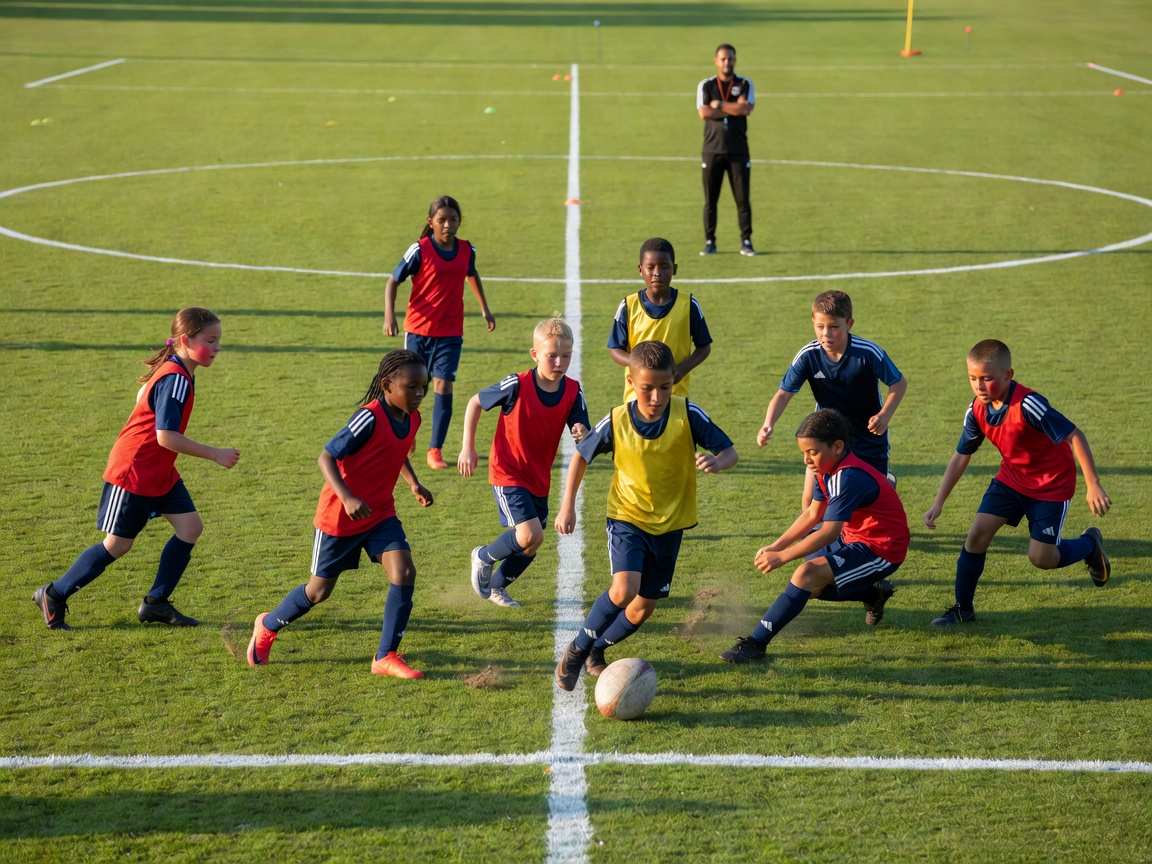
A youth camp is a planned experience, not simply a series of sessions. Organisers need to coordinate football, travel, meals, accommodation, supervision and communication. The right balance depends on age, group size, experience and the purpose of the camp. Treat each of these as a planning decision rather than an assumption.
Build groups around age and experience
Age bands can help make sessions manageable, but age alone does not describe a group’s experience or comfort level. Ask about playing background, any relevant participation needs and how confident participants are in unfamiliar settings. Keep groupings flexible enough to respond to the session objective. Avoid promising a particular level of individual attention unless the staffing plan can support it.
For younger participants, use clear instructions, short transitions and a predictable daily pattern. Older teenagers may be ready for more responsibility and longer discussion, but still need clear supervision arrangements. Explain who is responsible for the group, how participants can ask for help and where they should go between activities.
Set a sensible daily rhythm
Share a draft schedule before booking. Include arrival, meals, training, breaks, changing time, transport and a clear end to the day. Several demanding sessions close together can leave little time for rest or informal support. Build in transitions and recovery periods. Adapt the plan to weather, daylight, facility access and the participants’ age range.
- State session goals in plain language.
- Allow time between training, meals and transport.
- Identify indoor or lower-intensity alternatives for poor conditions.
- Make supervision arrangements clear outside the pitch as well as on it.
Technical work can include first touch, passing, receiving, finishing or small-group decisions. Choose a small number of priorities rather than trying to cover everything. Give players enough time to understand a task and practise it. Do not present a camp as a guaranteed route to performance gains.
Supervision, communication and safeguarding
Set out the supervisory structure before registration. Define named points of contact, attendance procedures, handover arrangements and what happens if a participant becomes separated from the group. Organisers should follow applicable safeguarding requirements and local rules. Check staff suitability, reporting routes, consent processes and emergency contacts with the responsible organisation. Make expectations understandable to participants and guardians.
Send practical information to parents or guardians in advance. Include arrival and collection times, accommodation arrangements, meal information, clothing guidance, contact details and the process for sharing relevant needs. Explain how updates will be communicated during the camp. Obtain only information needed to organise the activity, and handle it carefully.
Accommodation, travel and equipment
Accommodation should suit the age of the group and the agreed supervision plan. Check room arrangements, quiet hours, access, meal provision and the route to the training environment. Confirm who is responsible at each transition. For travel, document meeting points, luggage expectations, transfers and arrangements for delays. Young participants should not be left to resolve a changed itinerary without clear adult support.
Send an equipment list that matches the actual programme and conditions. It may include boots suitable for the surface, shin guards, training clothing, a water bottle, weather layers and spare socks. State whether equipment is supplied or each player brings their own. Include a simple labelling approach to reduce lost items.
Weather and changing conditions
Scandinavian weather can vary by season and location. Rain, wind, cooler temperatures and differences in daylight can affect session comfort and logistics. Check the forecast close to departure, but also plan a fallback. Confirm whether an indoor option is available, whether a session can be shortened and how changes will reach families. Use clothing guidance suited to the conditions and the planned activity.
Good fit for
A structured youth camp can suit a team, school-age group or organised youth cohort that has clear supervision, participant information and a shared training purpose. It is most workable when organisers can confirm the group’s needs, responsible adults, travel arrangements and suitable activity spaces before committing.
What to check
- Are age bands, session aims and expected intensity clearly stated?
- Who supervises participants during training, meals, travel and overnight periods?
- Are guardian communication, consent and emergency processes documented?
- Do accommodation, transport and facilities suit the group?
- Is there a weather and schedule contingency?
- Does the equipment list reflect the actual surface and season?
Keep the plan practical. A clear routine and calm communication make it easier for participants to focus on football while adults manage the wider responsibilities.